
A jurisdiction gap, unknown cargo, and limited authority on scene reveal critical weaknesses in Canada’s marine casualty readiness.”
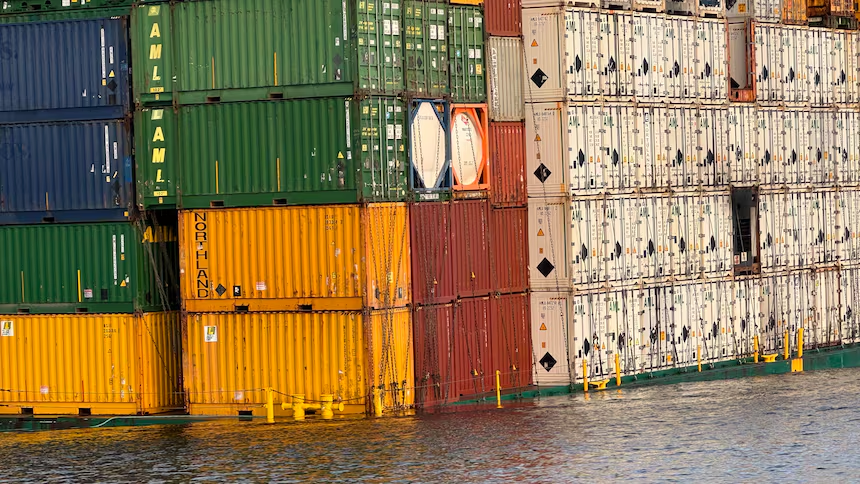
The first reports out of Bella Bella were simple and direct. A U.S. barge, southbound from Alaska, had been holed and was riding low with its decks awash. More than six hundred containers remained secured on board, but the barge had lost buoyancy and was now drifting in Canada’s internal waters with no confirmed salvage plan.
Heiltsuk Marine Response was on scene with trained personnel and equipment, yet they had limited authority to act and no reliable information about what the vessel was carrying. It was the kind of slow-moving marine casualty that exposes long-standing gaps in how we manage incidents on the British Columbia coast.
Jurisdiction and Canada’s Legal Authority
The barge belonged to Alaska Marine Lines, and early indications suggested the owner was directing much of the response from the U.S. side. This created a jurisdictional concern. Canada has full legal authority in its internal waters under the Oceans Act and the Canada Shipping Act. These laws empower federal officials to issue intervention orders, direct vessel owners, and assume control if a marine casualty threatens the environment or public safety.
Despite this clear authority, early decision-making appeared uncertain and fragmented. Critical information, such as the full cargo manifest and any hazardous or noxious substances, was not provided to Indigenous responders or Canadian agencies on scene. A lack of situational awareness can limit the ability to protect the environment and local communities when every hour counts.
Risks to Heiltsuk Territory and Coastal Habitat
For the Heiltsuk Nation, the location of the incident mattered. The barge was drifting in waters central to food harvesting, cultural practice, and sensitive marine habitat. Even if pollutants were not visible at the surface, containerized cargo often includes corrosive, reactive, or toxic materials that present delayed risks. A single lost container can trigger a long-term environmental problem that affects shorelines, fisheries, and community well-being.
Local responders understood these risks because they live with the consequences when something goes wrong. Their presence highlights the growing importance of Indigenous-led marine response capacity along the Central Coast.
Weather Escalation and Salvage Risk
Forecasts called for gale-force winds within twenty-four to forty-eight hours. A holed barge in deteriorating weather becomes a different ship quickly. Buoyancy decreases. Structural stresses increase. Container stacks shift under load. A vessel of concern can evolve into a full marine casualty with regional consequences and difficult salvage operations.
The Need for Clear Incident Command
Incidents like this underline the importance of establishing a clear chain of command early. Canada has the tools, capacity, and statutory authority, but these must be activated without delay. A Unified Command system that includes the Canadian Coast Guard, Transport Canada, the Heiltsuk Nation, and the vessel owner is essential. Without coordination, response organizations wait for direction while risks continue to build on the water.
Indigenous Marine Response Capacity
The Heiltsuk Nation has invested significantly in equipment, training, and operational readiness. They possess deep local knowledge and a direct interest in protecting these waters. Yet this incident showed that capability without authority or timely access to information limits their ability to protect their own territory. Integrating Indigenous responders into incident management is not optional. It is a practical requirement for effective coastal protection.
The Broader Blue Ocean Context
Canada’s coastal waters are getting busier. More container traffic moves through the Northern and Central Coast every year, and the Blue Ocean Economy is expanding. With growth comes increased marine activity and increased risk. Canada cannot rely on foreign vessel owners to manage incidents inside our internal waters in ways that align with Canadian public interest.
A Clear Lesson for Future Incidents
This barge incident is not the first of its kind, and it will not be the last. The lesson is clear. Canada must lead marine casualty management within its own jurisdiction and ensure that Indigenous responders, who are often first on scene, have the information and authority needed to act. Readiness only matters when it is exercised.
#MarineCasualty, #InsidePassage, #BellaBella, #MarineSalvage, #HeiltsukNation, #CanadianCoastGuard, #TransportCanada, #CoastalGovernance, #IndigenousMarineResponse, #BlueOceanEconomy